
Caetano Rocha, Diogo Verzegnazzi, Pedro Cisdeli, Juan Fiore, German Mandrini, Christian Cruz, Ignacio Ciampitti
Originally published in The Kernel – Indiana Corn Update, Issue #21 (September 12, 2025), Purdue University Department of Agronomy.
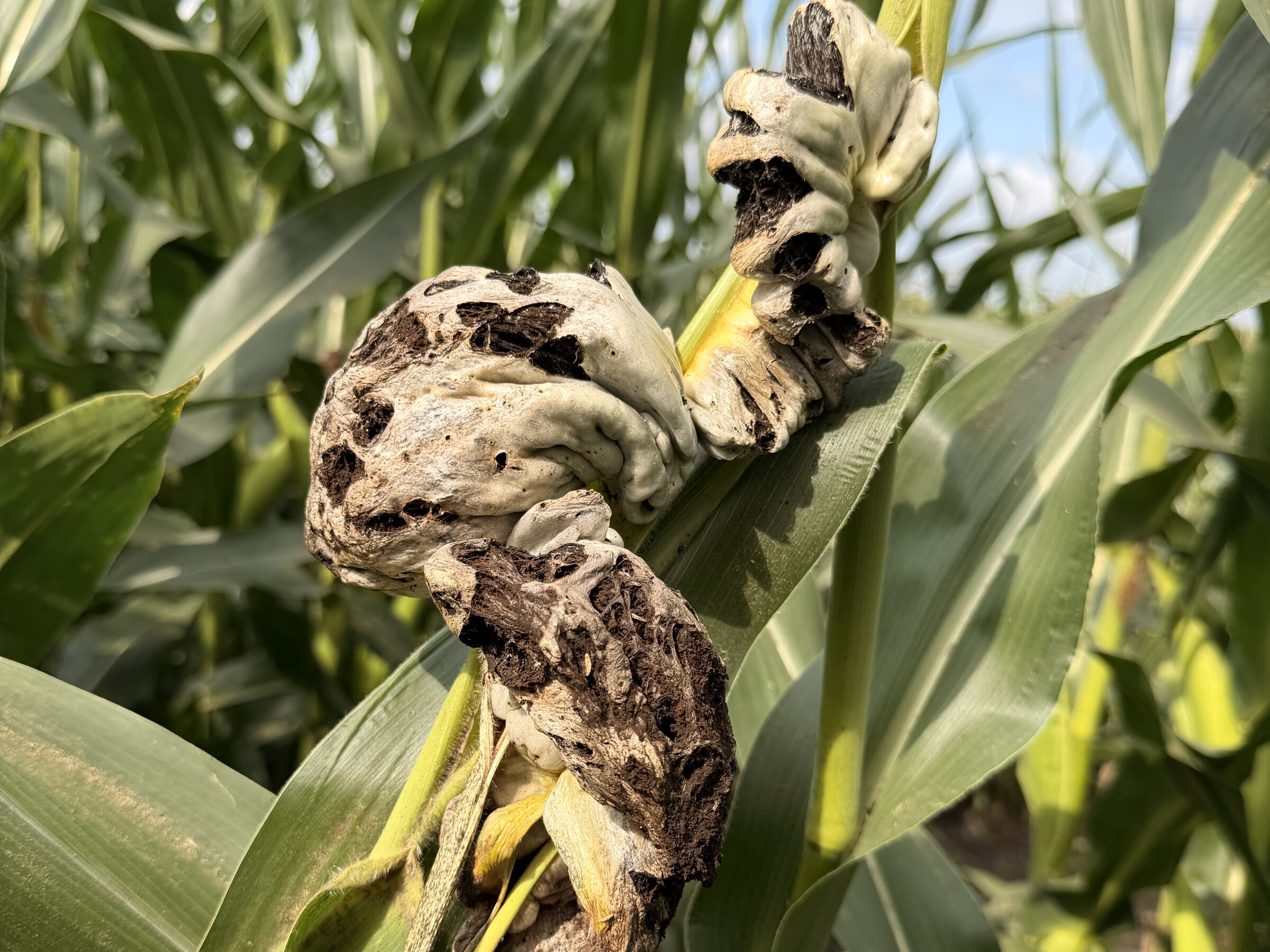
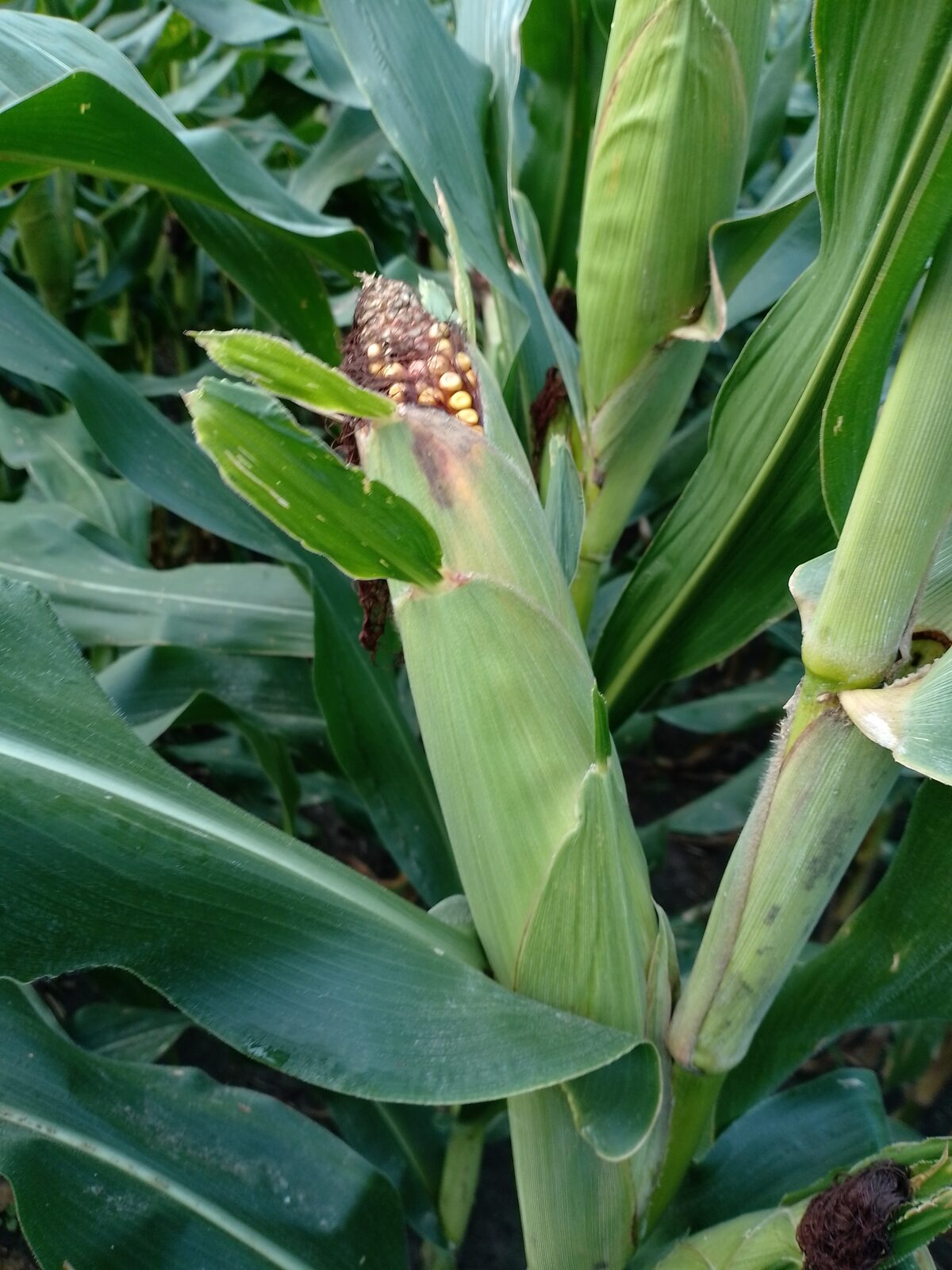
While collecting image data on corn fields this year, our team encountered many ear anomalies in fields containing non-commercial hybrids that lack specific protective traits. The most common anomaly we observed was overgrown ears that grew beyond the husk length, leaving the ear tips exposed. This exposure makes the ears vulnerable to various threats, including corn smut, caused by the fungus Ustilago maydis.
The corn smut is a biotrophic fungus that infects the entire aerial part of the plant, leading to the formation of galls. Interestingly, these galls are considered a delicacy in Mexican cuisine, where they are known as "huitlacoche" and are harvested and prepared in various traditional recipes when properly collected and cooked.
In terms of agricultural impact, the economic losses caused by this disease in the American Corn Belt have been considered minor since the early 1940s, when hybrids were widely adopted and levels of disease resistance improved considerably. While corn smut rarely causes widespread yield loss in commercial field corn, it can still lead to significant damage in sweet corn, organic systems, and processing operations—particularly when susceptible cultivars are grown under stressful or injury-prone conditions (Mohan et al., 2013). For this reason, control practices such as planting resistant hybrids, minimizing plant injury, and monitoring environmental stress remain important tools for managing risk.
Biology and Disease Cycle
Corn smut is a fungus that needs living corn plants to grow and reproduce, but it can also survive in crop residue and soil when conditions are unfavorable. The fungal spores are small, dark brown to black, and have a spiny surface.
The fungus can infect any actively growing part of the corn plant, but you'll most commonly see the characteristic galls (swollen growths) on ears, tassels, stalks, and leaves. Sometimes galls can even form underground on young seedlings. The good news is that corn smut does not spread throughout the entire plant, it stays localized to where the initial infection occurs (Pataky and Snetselaar, 2006).
Favorable Environmental Conditions for Disease Development
Several factors can increase the likelihood of corn smut outbreaks. The disease is most problematic when hot, dry weather during pollination is followed by rainy conditions. Strong winds and heavy rainfall also help spread the disease by carrying fungal spores from plant to plant and field to field.
Symptoms
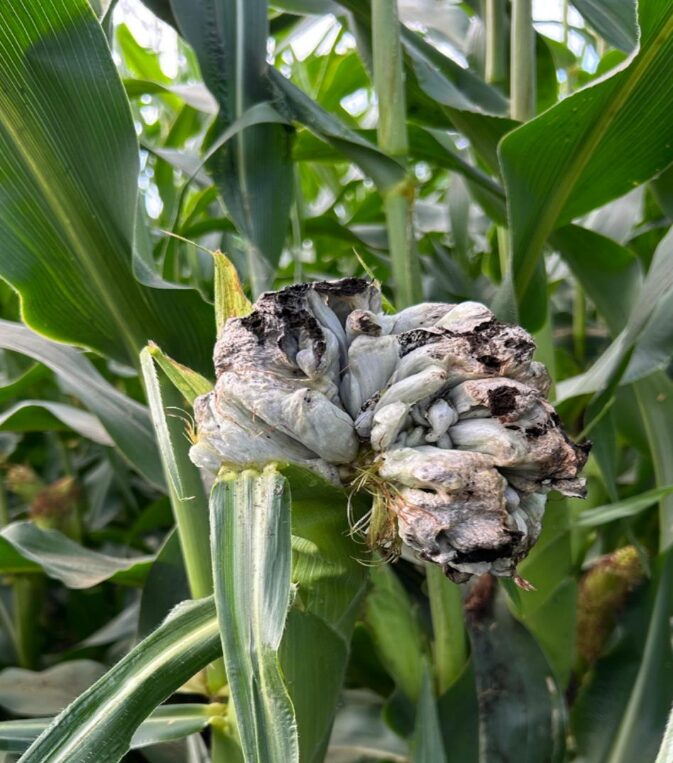
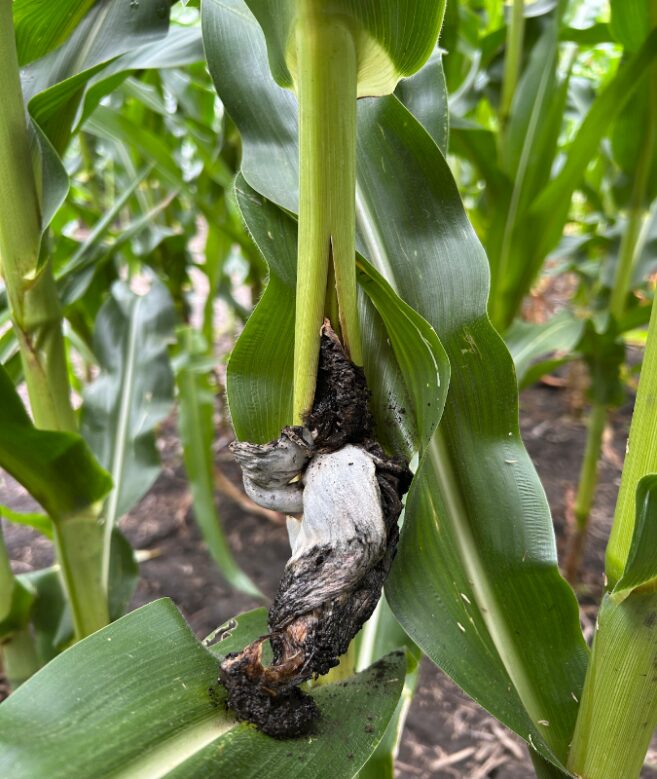
The most obvious sign of corn smut is the formation of large, swollen growths called galls on the ears (Figure 1) and stems (Figure 2). These galls can range from smaller than a marble to larger than a softball, sometimes over a foot across. The galls contain a mix of swollen plant tissue and fungal threads, along with masses of dark blue or black spores that give them their distinctive color.
Other symptoms like yellowing leaves, purple discoloration, and stunted plant growth may also occur. But the most common sign is always the tumor-like growths filled with dark spores.
Control
Effective corn smut management combines several key strategies. Resistant corn varieties are the most effective control method, as these hybrids are developed to withstand disease pressure. For example, recent studies have shown that the fungus releases proteins that interfere with the plant's defenses and support infection, key insights that help guide the development of resistant hybrids (Schuster et al., 2024).
Crop rotation also provides significant benefits. Since corn smut survives in crop residue and soil, rotating to non-host crops like soybeans or wheat for one to two years reduces pathogen populations.
Minimizing mechanical injuries during field operations is also important, as the pathogen enters through wounds from cultivation equipment, hail damage, or insect feeding.
The Next Step in Crop Monitoring
The image data we collected from corn fields this season is being utilized in advanced computer vision applications. Using Artificial Intelligence models, we can create detailed three-dimensional models (Figure 3) of corn ears from standard photographs (Figure 4), a process called 3D reconstruction.
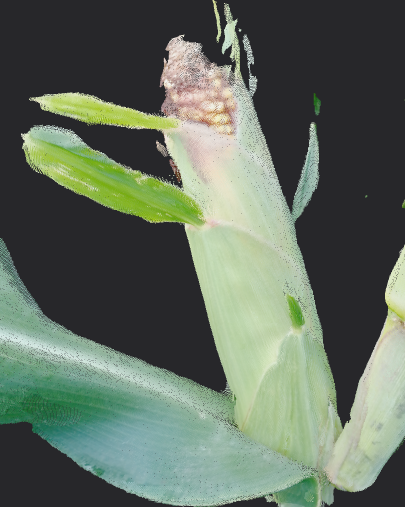
These digital models allow us to measure important crop traits that would be difficult or time-consuming to assess manually, such as ear length, kernel row count, and husk coverage. Additionally, we can use this technology to automatically detect diseases like corn smut, helping identify genetic materials more susceptible to the disease and problem areas in fields with greater speed and accuracy.
When applied to plant breeding pipelines, digital tools such as optical sensors, remote sensing, and AI-based image analysis allow us to screen through thousands of plots, reducing time and effort while improving the accuracy of the data. This process, called high-throughput phenotyping, represents a new branch of traditional phenotyping that aims to extract meaningful data about each variety sown and tested in the field. The result is a better identification of top-performing varieties, including those with high yield and resistance to diseases like corn smut. Although these tools are not yet fully integrated into disease prediction models, their ability to detect corn smut early and across large areas shows promise. When combined with breeding-focused phenotyping, they could enhance both early detection and the selection of resistant hybrids (Mikaberidze et al., 2025).
References
Mikaberidze, A., Cruz, C. D., Zerihun, A., et al. (2025). Opportunities and challenges in combining optical sensing and epidemiological modelling. Phytopathology, First Look. https://doi.org/10.1094/PHYTO-11-24-0359-FI
Mohan, S. K., Hamm, P. B., Clough, G. H., & du Toit, L. J. (2013). Corn smuts (PNW 647). Oregon State University Extension Service.
Pataky, J., & Snetselaar, K. (2006). Common smut of corn (Syn. boil smut, blister smut). The Plant Health Instructor.
Schuster, M., Schweizer, G., Reißmann, S., et al. (2024). Novel secreted effectors conserved among smut fungi contribute to the virulence of Ustilago maydis. Molecular Plant-Microbe Interactions, 37(3), 250–263. https://doi.org/10.1094/MPMI-09-23-0139-FI